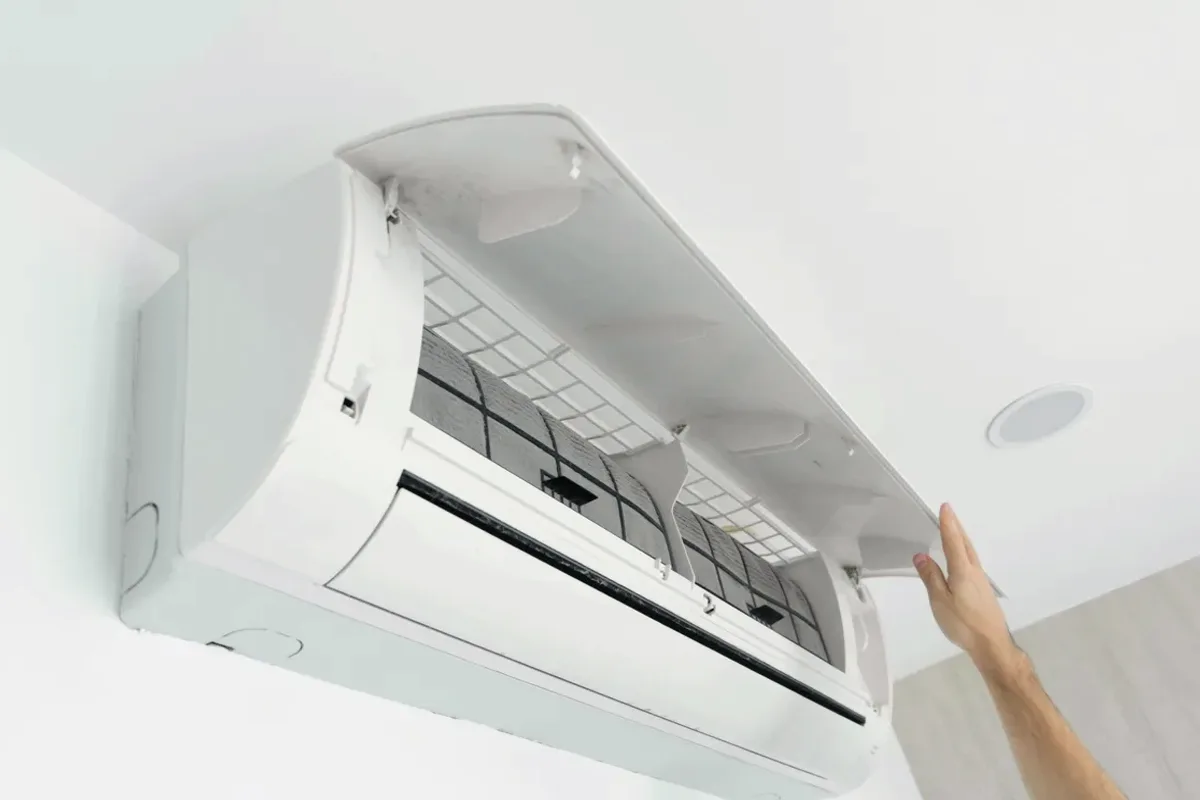
Request ductless ac installation for a property in Aurora. Include the equipment, the problem or planned work, and your location so the request can be reviewed.
Which rooms need cooling, and can an indoor head serve them without leaving important areas outside its zone?
A ductless mini-split can provide cooling where extending central ductwork is impractical, but equipment selection and placement depend on the rooms to be served. An assessment should consider room dimensions, exposure, layout, electrical provisions, and whether one indoor head can distribute air effectively or separate zones are needed. The outdoor-unit location, condensate route, and line-set path also affect installation scope. Existing openings may be reusable only if their condition and dimensions suit the selected equipment.
An installation assessment can document the rooms and zones, proposed head locations, outdoor-unit position, electrical requirements, condensate drainage, and line-set route. These details affect equipment selection and the work involved. If an existing mini-split is being replaced, its mounting points and penetrations need inspection rather than automatic reuse; the new model's connections and installation requirements may differ.
Ductless mini-split zoning and indoor-head placement
Outdoor-unit location, line-set routing, electrical supply, and drainage
Existing penetrations and cold-weather equipment requirements
Assessment and Scope
Questions for the Proposed Work
01
Match zones and head placement to the rooms
The number and location of indoor heads should follow the areas that need cooling and the layout between them. A head aimed into an obstructed space may not serve adjoining rooms as intended, while separate zones allow different areas to be controlled independently. Room size alone is not the whole assessment: windows, sun exposure, ceiling height, and connected openings can change the load and placement decision.
02
Plan the outdoor unit and installation route
The outdoor unit needs a suitable location with access for service and manufacturer-required clearances. The line-set route, wall penetrations, condensate drainage, and electrical supply should be reviewed together because one constraint can affect another. Where a previous opening or mounting location is being reused, its condition, sealing, and suitability for the new model should be confirmed before the installation scope is set.
03
Check cold-weather requirements when selecting equipment
If the mini-split is intended to provide heating as well as cooling, verify that the selected model and installation plan suit that use. Outdoor-unit placement, drainage, line-set insulation, and the manufacturer's defrost requirements are relevant to cold-weather operation. These considerations do not apply equally to every installation, so compare the equipment specifications with the property's intended use rather than assuming all ductless systems have the same capabilities.
Compare the next step
For an unfamiliar mini-split, first learn which indoor units belong to each outdoor system and whether the controls impose shared operating limits. Ask what expansion the exact equipment supports, which components a new zone would require, and what maintenance access should be preserved when furniture or room use changes.