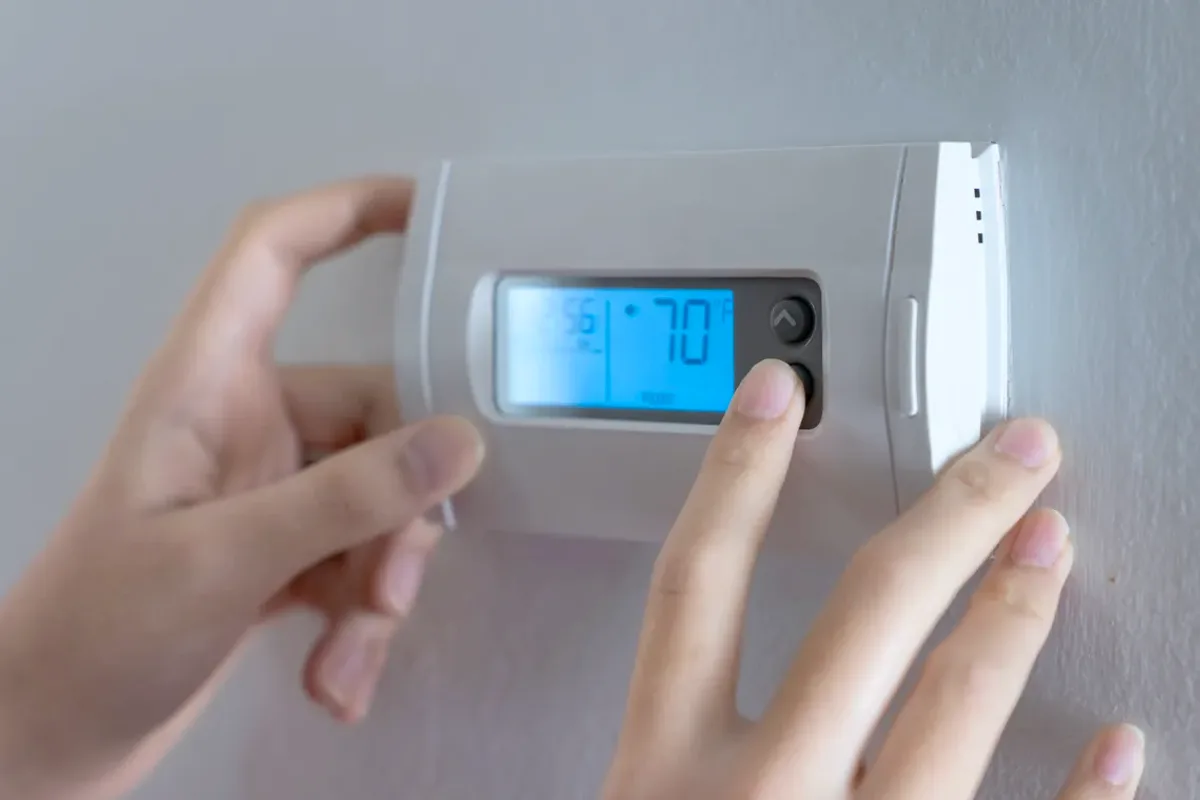
Request thermostat repair & replacement for a property in Aurora. Include the equipment, the problem or planned work, and your location so the request can be reviewed.
Does the thermostat show an inaccurate temperature, lose power, or behave differently after an HVAC system change?
A thermostat that will not power on, displays an unexpected temperature, or causes irregular cycling may have a device fault, a location problem, or a mismatch with the heating and cooling equipment. Diagnosis should identify the thermostat model, connected system, wiring arrangement, and when the symptom occurs. Repair may suit a correctable fault, while replacement can address an obsolete or incompatible control. Smart or programmable features should be selected only after confirming that the equipment can use them.
Assessment can compare the thermostat reading with conditions at its location, review its power and control connections, and identify the furnace, heat pump, or other equipment it operates. A nearby supply vent, window, or direct sun can distort sensing. Wiring and system stages affect compatibility, so internal electrical checks and control changes require appropriate service procedures.
Thermostat power, temperature sensing, and cycling faults
Location effects and calibration considerations
Programmable or smart controls and HVAC stage compatibility
Assessment and Scope
Questions for the Proposed Work
01
Distinguish a device fault from a poor location
An inaccurate reading may reflect thermostat calibration or the conditions around the device rather than a failed HVAC component. Direct sunlight, a cold window, or a nearby supply register can influence its sensor. The reading, location, and system response should be considered together. Relocation or another corrective approach may be more appropriate than replacing a thermostat that is otherwise functional.
02
Confirm compatibility before choosing a replacement
A replacement thermostat must work with the equipment's wiring and control requirements. Furnaces and heat pumps can use different operating stages, and some systems require controls that support auxiliary heat or particular fan arrangements. Smart features do not guarantee compatibility. Identifying the equipment model and existing connections before selecting a device helps establish whether additional control changes are needed.
03
Compare repair with replacement
Repair may be suitable when inspection identifies a correctable power, sensing, or connection issue and the control remains compatible with the system. Replacement may be more appropriate when the device is damaged, obsolete, or unable to control a changed HVAC system. Ask what fault was confirmed and whether the proposed replacement supports all required heating and cooling stages before deciding between the options.
Compare the next step
Identify all existing schedules, remote accounts, and sensors before replacing the control. Ask who owns the app account and whether an offline operating mode is available. Have the equipment response demonstrated at handover so the new owner can distinguish a normal control sequence from a fault.
Thermostat wiring is not universal. Do not connect wires by colour alone or work on energized wiring; a compatible control must be configured for the equipment it serves.